
Category Archives: Annex SL

Adventure Tourism – Standarday – ISO 21101

“Adventure tourism — Safety management systems”, ISO 21101:2014 is this Standarday’s guest standard.

I try and keep an eye out for the release of new ISO standards, and sometimes I see one that is particularly interesting or shareable. Well, interesting to me, anyway.
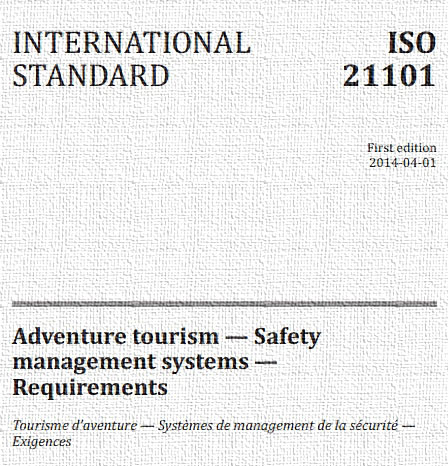
ISO 21101 - Adventure TourismOne of the things that separates 21101 from the crowd of similar management standards is that the target audience is potentially consumer-based. Typically the adoption of a standard is a pass-down requirement from one company to another. Ideally, though less frequently, a company will adopt a standard because they know it will make them more competitive.

I do believe it is a bit of a combination, since a hotel chain, for example, might require an adventure tourism service provider be so Certified.

The introduction to ISO 21101 claims adventure tourism is a global industry of growing importance, and that adventure tourism involves an inherent element of risk. There must be a balance between risk and reward; adventure and danger. ISO 21101  and it’s sister standards 21102 (“Adventure tourism – Leaders – Personnel competence”) and 21103 ( “Adventure tourism – Information for participants”) provide a basis for adventure tourism activities providers to plan, communicate about, and deliver adventure tourism activities as safely as practicable.

We’re talking about ziplining, mountaineering, rock climbing and other “I paid money for this kind of abuse?” type of non-work activities. Apparently, in contrast to work, pretty much anything else serves as relaxation.

I’m not sure how the release of the standard will impact the industry, but I’m hopeful. I was able to find an article in an industry journal from last year, “Trailblazerguide.com”; specializing in white water kayaking and rock climbing in South Africa.  Quite an enjoyably informative site, by the way. They posted an article in June of 2013,  “Wake up call for adventure companies” describing the standard’s impending release and I believe, based on the comments, that the response was generally supportive.

The standard is also interesting because it complies with Annex SL (I’ve added it to the list I supplied in the related Annex SL blog post: here).

Without giving away too much detail (or reproducing the standard for free – which is frowned upon) here is the table of contents. Note how closely it aligns with some of the newer standards, including the DIS of ISO 9001:2015.

21101 Contents – Adventure Tourism

1 Scope
2 Normative references
3 Terms and definitions
4 Context of the organization

4.1 Understanding the organization and its context
4.2 Understanding the needs and expectations of interested parties
4.3 Determining the scope of the adventure tourism safety management system
4.4 Adventure tourism safety management system

5 Leadership

5.1 Leadership and commitment
5.2 Policy
5.3 Organizational roles, responsibilities and authorities

6 Planning

6.1 Actions to address risks and opportunities
6.2 Adventure tourism safety objectives and planning to achieve them

7 Support

7.1 Resources
7.2 Competence
7.3 Awareness
7.4 Communication
7.5 Documented information

8 Operation

8.1 Operational planning and control
8.2 Emergency preparedness and response
8.3 Managing incidents

9 Performance evaluation

9.1 Monitoring, measurement, analysis and evaluation
9.2 Internal audit
9.3 Management review

10 Improvement

10.1 Nonconformity and corrective action
10.2 Continual improvement

Annex SL and Adventure Tourism

Fairly close to Annex SL, isn’t it? You can see, using the standard for Adventure Tourism, the power of the Annex; how it can make an unfamiliar management system mostly familiar – only the specific requirements change.

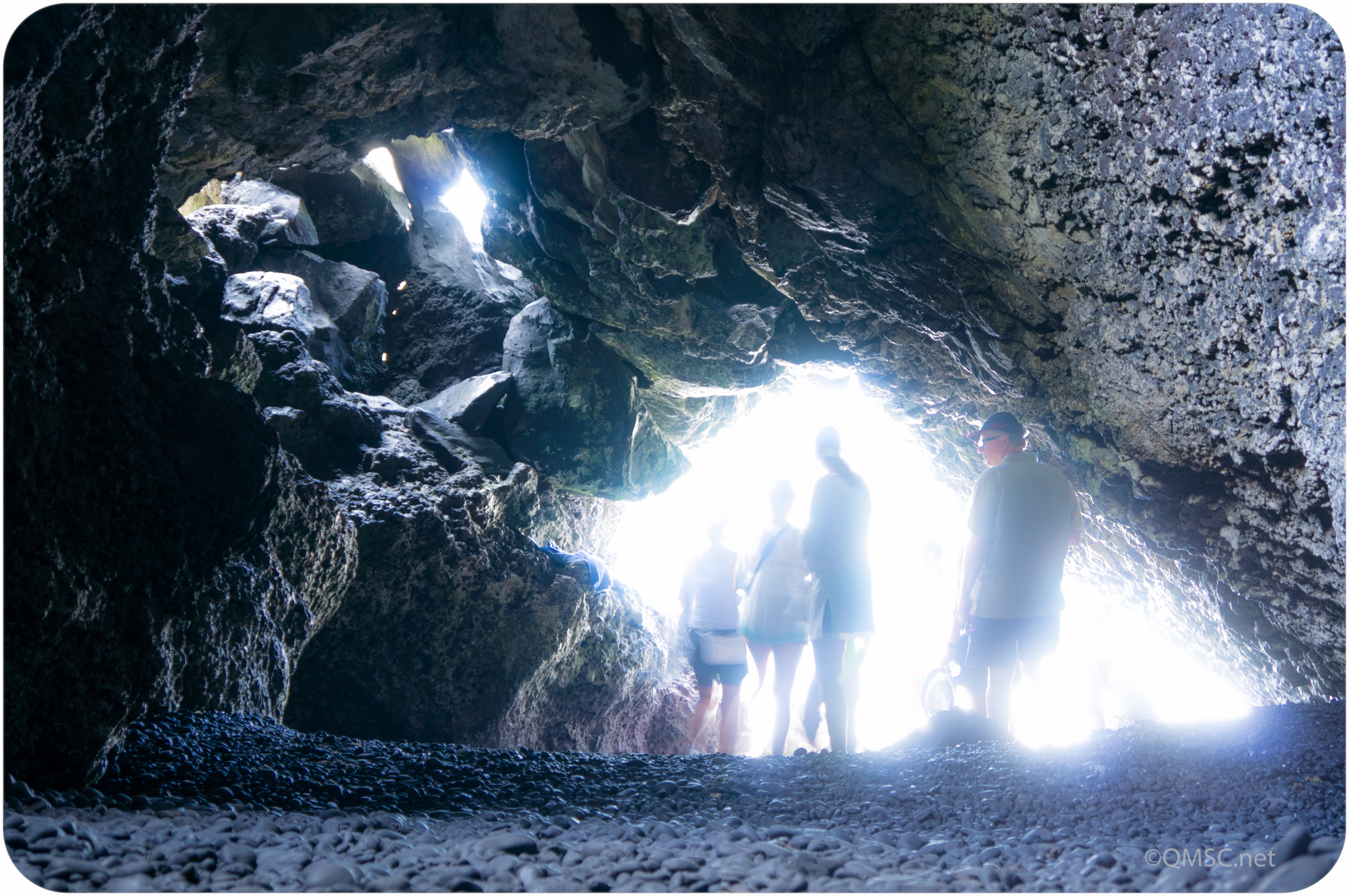
Maybe the next time you’re on vacation thinking about that wilderness hike, or the bungie jump into the volcano (really?) – consider asking if the provider is ISO 21101 Registered.

I for one, wouldn’t dream of a jumping into lava unless the company absolutely was 21101 registered – call me crazy.

Until the next Standarday (whenever that is) – thanks again.

Annex SL’s Impact

What does Annex SL have to do with an interesting table leg?
Some supports are interesting

While it might have been the intent that Annex SL would be the template for all new standards and revisions to standards – this isn’t exactly the reality.

Annex SL was described in the last post – you may review that HERE if you like.

As a quick summary, “Annex SL” is an ISO document that defines a framework – the basic structure with common terms and requirements – for a generic management system. A standard would be this structure PLUS any additional sector specific requirements.

Understanding this is the key to new ISO releases, such as DIS ISO 9001:2015.

ISO 9001:2015 will not be the first ISO management standard to employ Annex SL – nor will it be the last.

Already released and compliant with Annex SL:

  • ISO/IEC 27001, Information technology: Security techniques, Information security management systems
  • ISO 30301:2011, Information and documentation: Management systems for records
  • ISO 22301:2012, Societal security: Business continuity management systems
  • ISO 21101:2014, Adventure Tourism
  • ISO 20121:2012, Event sustainability management systems
  • ISO 39001, Road-traffic safety (RTS) management systems
  • ISO 55001, Asset management – Currently on CD ballot with publication scheduled for 2014.

What this means is, for one thing, organizations that have one management system in place will have the basic structure needed to adopt another one – or several.

En route via Annex SL:

  • ISO 9001:2015 (General Quality Management) – I’m guessing you knew that one
  • ISO 14001:2015  (Environmental management) – Also expected in 2015.  I have been following the development of this standard and you’ll find related articles on the site
  • ISO 13485 (Medical devices. Quality management systems. Requirements for regulatory purposes) – Released as a Draft International Standard (DIS) on 20 Feb 2014.  The voting period for that closes on 20 July of this year.

Probable Defections to Annex SL:

These standards, for various political and structural issues I can’t pretend to understand, probably will not utilize Annex SL as their template in the coming updates:

  • ISO/TS 16949 – International Automotive Task Force standard. Cars – the big automotive companies dictate what takes place in this rarefied playing field
  • AS9100/10/20 – International Aerospace Quality Group (IAQG) standards  –  Essentially these folks are the Vegans of the management system world . If you don’t know what I mean by that then I am sorry. Actually, I am also sorry either way
  • ISO 45001 (formerly OHAS 18001) – Occupational Health and Safety. A bit of a controversial one to end on because the ultimate format isn’t set in stone. There are those who believe complying with the Annex SL structure will add too much “bloat” to the document.  Apparently bloat is a bad thing.

That’s approximately the current Annex SL situation, with a few less notable omissions.

Personally, I’m hoping the structure holds firm and far as it should serve to make it easier for clients to adopt – and for auditors and certification bodies to consistently understand.

Can it be better? Probably – but it’s a start, and more importantly – a basis for common ground.

Thanks for checking in – and for calibrating yourself.

And now a word from our sponsor:

Annex SL Esplained

“Annex SL” is an ISO/IEC document that defines a framework for a generic management system. Understanding it is the key to new ISO releases, such as DIS ISO 9001:2015.

It was published by ISO’s Technical Management Board (TMB) in 2012 but since the recent release of DIS ISO 9001:2015 – and it’s strong impact on that standard, a review of the Annex should be helpful to implementors and auditors alike for several years to come.

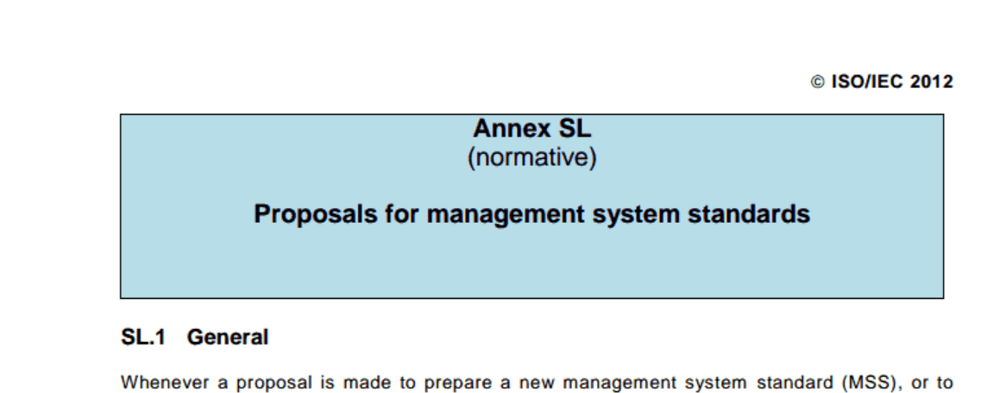
annex sl page

You may not have heard of the TMB – but maybe you have heard of a TC, or “Technical Committee”. These are groups of experts; representatives of industry, NGOs, governments and other stakeholders within ISO. One well-known TC is TC 176 – that’s the group responsible for ISO 9001 or “Quality management and quality assurance”.

There are (or have been) at least 290 TCs (I know this because they are numbered sequentially and the latest one is TC 290).

You can see a full list HERE.

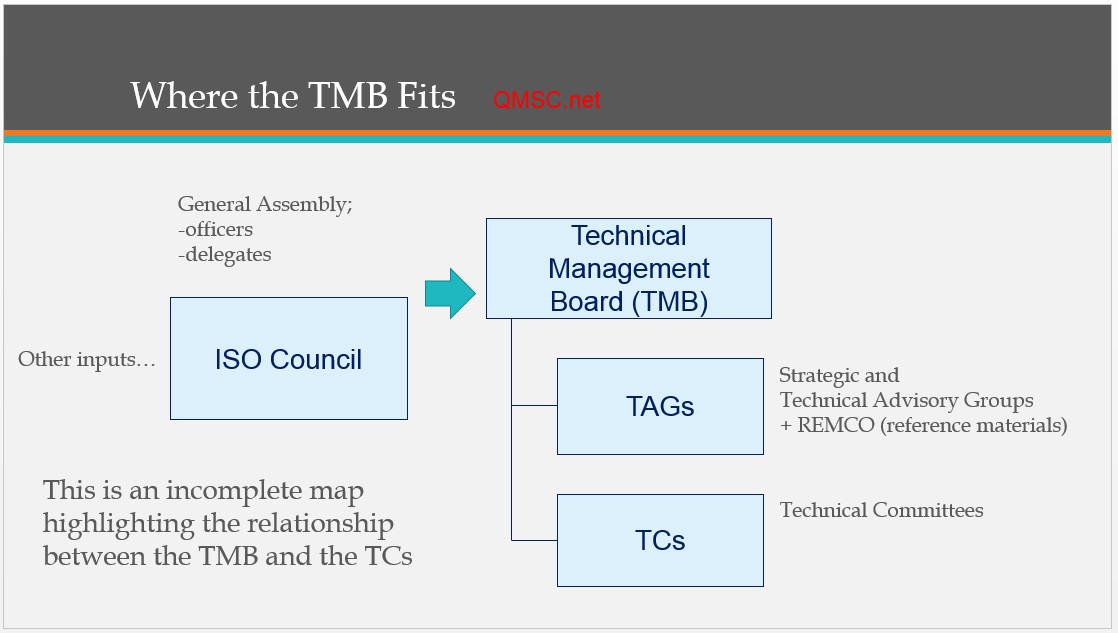
The TMB sits above the TCs within the “Organization” (ISO). Their charter is this that they

  • “… shall have responsibility for the general management of the technical committee structure…
  • approve the establishment and dissolution of technical committees, and revisions of the directives for the work of technical committees…
  • shall deal with all matters of strategic planning, coordination,
  • and monitoring of technical committee activities

– (Article 9.3 of the ISO statutes).

TMB Map

Annex SL is one attempt by the TMB to help the TCs provide a better product more easily and efficiently.

Annex SL does this by:

  1. reducing duplication efforts – many management system standards have the same basic requirements
  2. by reducing the differing interpretation of the same terms, or consolidating terms
  3. and by delivering the material in a clear and repeatable manner; making it digestible by consumers of multiple standards.

As you could imagine, all of these committees don’t always have knowledge of what the others are doing – inconsistencies occur. Then, once a standard is released, the industry; those who are certified to these standards and the auditors that interpret them – sometimes come to different conclusions.

There are mechanisms within the certification process to minimize confusion and disconnects, but a better way is a top-down approach; one that begins above the standards creation level itself. Annex SL is a large leap toward a more effective process.

What is in Annex SL?

It is a template – a framework. Scaffolding for other standards. It consists of:

  • Eight clauses
  • Core text
  • A baseline of 45 ‘shall’ statements generating 84 requirements (differing standards will have additional requirements)
  • Base terms and core definitions

This common structure will contain, in addition, the special requirements of the target standard (forgive, please, my space-saving abbreviations. Click to embiggen, then hit your browser’s back button):

ASL Main Structure

And there are common core definitions; the following words will have the same interpretations across all Annex SL conformant standards:

  • organization
  • interested party (preferred term)
  • stakeholder (admitted term)
  • requirement
  • management system
  • top management
  • effectiveness
  • policy
  • objective
  • risk
  • competence
  • documented information
  • process
  • performance
  • outsource (verb)
  • monitoring
  • measurement
  • audit
  • conformity
  • nonconformity
  • correction
  • corrective action
  • continual improvement

A given standard may have other words to be defined, naturally.

“SL”? – What Does It Stand For?

I wish it was something cooler, but…

“SL” is simply the sequential number of an Annex within numerous annexes as part of a document titled, ISO / IEC Directives, Part 1 “Consolidated ISO Supplement – Procedures specific to ISO”

The Annex before it is “SK” (though it is currently just a placeholder), and the one after it is “SM”, “Global relevance of ISO technical work and publications”.

Aren’t you glad you asked. You were going to ask, right?

For next time:

How has Annex SL impacted Publications?


Thank you again. Go forth – and annex something.