OHSAS 18001, “Occupational health and safety management systems – Requirements” is a bit of an odd duck in the landscape of ISO this and ISO that. Yet it is the only standard that serves the purpose of providing a company with a way to tell the world it has a safe, standardized, workplace without spocking customers’ eyebrows.
Enter ISO/PC 283 “Occupational health and safety management systems – Requirements”. It comes on the heels of some widely publicized workplace safety incidents, including the recent Bangladeshi tragedy where nearly 1,200 workers were killed.
Savar Building Collapse
In the words of S. Joe Bhatia, American National Standards Institute (ANSI) president and CEO, “This proposed occupational health and safety standard represents one of the most significant consensus standards activities in the last 50 years. It has the potential to significantly and positively impact occupational health and safety management on a global level.”
What it Means for OHSAS 18001
What this means for the existing OHSAS 18001, and the country specific ANSI Z10-2012 “American National Standard for Occupational Health and Safety Management Systems”, is that when the ISO version is released, a company will need to convert to it. Registrars will have an upgrade path in place by then, so the transition should be an easy one. ANSI Z10 will actually remain, but the contents will be replaced with the ISO OHSAS.
Still quite early and, beyond the basic structure, the real requirements are as yet to be determined. The next meeting of the committee responsible is on the 21st of October; we’ll know more after that.
So, perhaps in 2016 or 2017, OHSAS 18001 will be renewed as ISO 18001 (or some other number), but in the meantime OHSAS 18001 or even ANSI Z10 is the remaining option.
Thank you for reading, and I’ll keep you posted – until then… go forth, and calibrate thyself.
It’s that time again! A few photos I’ve taken from my travels – nothing like getting hooked into someone’s vacation slides, right? Well these are a workin’ man’s slides, my friend; there wasn’t a single umbrella to be found, not on a beach – and not [sadly] in a glass…
Another group of aeroplane related shots, plus a couple from along the drive to my audits this week – enjoy!
Let’s start with 5 Whys! Why not? Welcome to the first installment of “How To’sday”.
“5 Whys” may be a basic tool, but it is extremely useful. Some of the best tools are simple – sticks are pretty good at getting termites…
5 Whys = 1 Fix
5 Whys is a problem solving tool; part of a disciplined approach to getting at the root cause of something gone wrong. Sometimes when a defect occurs, companies tend to start at the end – skipping cause entirely and instead focus on what they perceive is in their power to do. And the problem with that is they didn’t understand the cause, and are therefore possibly fixing the wrong thing. As the saying goes, “When you know how to use a hammer, everything looks like a nail”.
Let’s look at an example: Suppose there’s been an uptick of customer complaints. One customer says they received the item with scratches, another says her display was loose in the housing, and still another says the little packet containing the user manual and some small accessory wasn’t received (they actually said it was never sent, but what do they know?).
If cause isn’t addressed we’ll not only end up sending out a new accessory packet, and having two items returned; all this hassle and expense for everyone involved – and every reason to think there will be more strangeness next week. Worse, we start complicating the lives of all concerned – because we know how to use a telephone we call vendors and tell them to stop scratching things, and we get manufacturing to tighten up those display panels. Meanwhile they start doing that and crack bezels left and right – cutting yields; maybe Engineering can spec a thicker bezel? They can but the power requirements are a little different – hey, let’s re-spec that power supply, too. And because we know those white gloves prevent scratches we tell production people to wear them – and take off all that jewelry! “Fiasco”, that’s exactly what it is (a nice Italian word referring to a bottle – interestingly, the English use an expression “gone pear-shaped” with a very similar meaning. Don’t worry, it won’t be on the test. And no, there isn’t a test.)
But, we’re educated adults and we know Root Cause is important – but sadly, we have no idea, in this case of scratches and loose and missing things, what the cause is.
Wouldn’t it be cool if it was all just one cause? If we just had to do one thing for all three?
Our enlightened Quality Toolbox has more than just hammers, it also has 5 Whys – along with a slew of other things we can talk about on another Tuesday (“slew” is a nice Irish Gaelic word, btw – as is “shillelagh” which is an excellent Irish hammer).
Seems simple: just ask “Why?”. “Why why why why why!” – in general, after the 5th, we’ve come to either a broken process, or one that doesn’t exist. If you’ve stopped at something beyond control (“it was raining”, “gravity”) then either you’ve gone too far, or not far enough.
Asking the Why is only part of 5 Whys.
The questions lead to investigations, investigation leads to more questions. This is where I want to draw your focus away from 5 Whys being about just asking Why – the real trick to 5 Whys is twofold – asking the question from the right perspective; asking the right people and investigating.
We try asking production or shipping department:
1) “Why was the the accessory bag missing?” – “Oh, I guess we just forgot to put them in the box.”
We ask, “Don’t we have a process for that? Those cut-outs we made in the foam”, or “That check list?”
The response, “Yeah, we have that, and Quality does those random out-of-box audits”
Well. That wasn’t particularly fruitful, we only got to 1 Why of the 5 Whys. The first why revealed that a process exists, even sounds like a nice poke yoke process (another Tuesday) – and there’s an inspection step. We might investigate with Quality to see what kind of results their samples have been getting.
What if we started at the beginning? 5 Why TIP: Start closest to the problem first – and do it as quickly as possible.
The customer reported the failure – ask them. “Excuse me, customer, we’re investigating your recent issue and we’d like to keep it from occurring in the future, did you personally handle the package in question?”
They may or may not be amenable to this kind of thing, but it can only help to ask – and they’ll know you really have their best interest in mind.
It is possible you end up dealing with someone in receiving; follow the trail. Just because the question is simple, doesn’t mean the answer has to be.
We might ask, “Have you looked everywhere in the packaging?”
Receiving replies, “Of course I did, even looked twice.” There is a pause, “But you know, I did notice that the box had a seam that was opened a little. Probably too tight for something to squeeze out of, I didn’t mention it to anyone.”
Well then. That could be something.
Let’s look at the scratch now. If you start with the production line – your own process, it may take hours or days following the product along and identifying where the scratches could have occurred. Hey! Let’s turn that into a kaizen event (ask me on a Tuesday). Then based on that, instituting corrective measures all along the line that increase complexity and could potentially lead to other errors.
BUT if you start with the customer – again, explaining as above (the larger or more sophisticated customers will expect this anyway); maybe they send you a picture of the scratches.
Maybe you end up at their receiving department and you hear, “You know, that box was pretty beat up, but the [awesome widget] looked fine to me.”
Would be nice to get some pictures of that box, wouldn’t it?
Sakichi Toyoda
You could easily imagine the same scenario with the loose display. That box has been in a fight and it seems to be losing.
Let’s look at that as if we had investigated properly, starting closest to the problem, and gathered the facts.
1) Why is the display loose? Repeated blows during shipment.
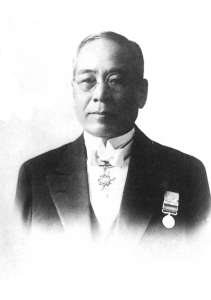
2) How did those blows occur?HOLD ON A SECOND! Did you see that? I didn’t say “Why” I said “How”. Forgive me for this slight, and maybe controversial sidebar. The thing is, in Japanese, the word for Why and the word for How are very similar (なんで or “nande” ). And the gentleman who invented the 5 Whys technique was in fact Japanese – Sakichi Toyoda – you’ve heard of his company or maybe driven one of his cars. Somewhat inconsiderate of me to throw that at you in your first example, but – there it is; “How” can occasionally be used in place of “Why”.
Anyway. 2) How did those blows occur? During shipment, the box did not provide adequate protection.
Not a big leap there, we do have a trend of what could be explained as failed packaging.
3) Why didn’t the box protect the contents? It wasn’t the correct rating for the weight of the product.
4) Why wasn’t the box correctly rated? We never checked.
5) Why didn’t we check? It is a new product and well, what do you know, it’s heavier than our usual product – we don’t really have a step in our process where we consider packaging.
Voilà! A missing step in our process. Now, if it’s a new product, we do a packaging evaluation.
All three problems solved with the help of not just 5 Whys, but good investigation using the proper perspective. Remember, simple questions don’t necessarily yield simple answers.
Thanks for reading about 5 Whys! Now, why not Go forth and calibrate thyself?